
Tailored movement: Adapted Physical Activity(APA)
Source : Nutriactis/Rouen-Normandie hospital



Adapted Physical Activity (APA) refers to physical or sports activities adjusted to the abilities of people with specific needs (chronic illnesses, disabilities, age-related limitations, frailty). Based on multidisciplinary scientific knowledge, it assesses individual abilities and needs in order to design tailored programs. The goal is to promote prevention, rehabilitation, inclusion, and social participation, while supporting the person toward regular, sustainable physical activity integrated into their lifestyle.
Discover “Adapted Physical Activity” (APA) in this issue: meet the professionnals behind it, learn how it works, and find out who can benefit from it.
Understanding APA
Adapted Physical Activity (APA) consists of structured exercise programs, limited in time, and supervised by a qualified professional. This professional adjusts the program according to the patient’s medical and physical condition, functional abilities, specific needs, and risk factors related to physical activity.
The French National Authority for Health (HAS) distinguishes four levels of physical activity intervention:
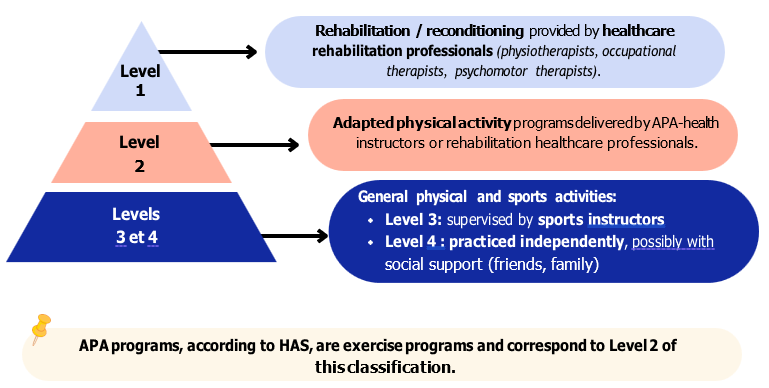
Adapted physical activity, according to the French National Authority for Health (HAS), is an exercise program:
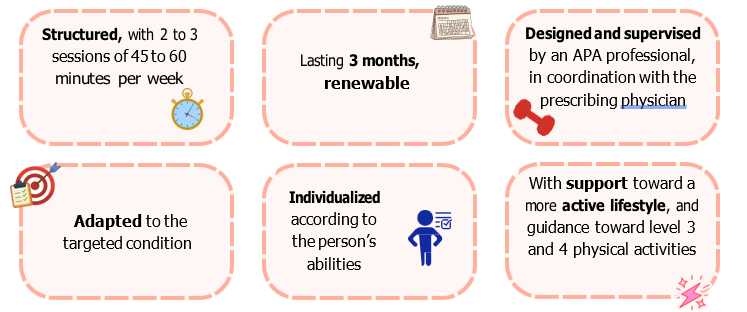
Adapted Physical Activity is therefore an exercise program aimed at supporting patients with chronic diseases who do not feel able to practice sports independently, by offering personalized, progressive, and safe guidance.
Who is it for?
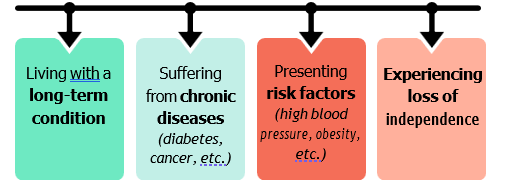
Adapted Physical Activity (APA) can be prescribed for people who are:

Before prescribing APA, a medical evaluation is carried out and may be complemented, if needed, by a specialized physical activity consultation to define the type, duration, frequency, and intensity of the activity.
The patient is then referred to qualified professionals to implement the program, either within specialized structures or “Sport-Santé” (Sport-Health) centers.
Is it reimbursed?
APA is not directly reimbursed by the French Health Insurance system. However, some regional health agencies, local authorities, or supplementary insurers may provide financial assistance to reduce patient costs. In addition, in some university hospitals (CHU), APA is integrated into care pathways for certain conditions, allowing partial or full coverage.
Why?
APA is recognized as a non-drug therapeutic approach for patients with long-term or chronic conditions, as part of their care pathway.
Its benefits have been demonstrated:

- Slowing the progression of chronic diseases
- Reducing complications associated with conditions
- Preventing loss of independence and frailty
- Maintaining or improving cognitive abilities
- Social benefits (development of social connections)
- Increased life expectancy
- Mental health benefits (improved self-esteem, body image, etc.)
Focus: APA and obesity
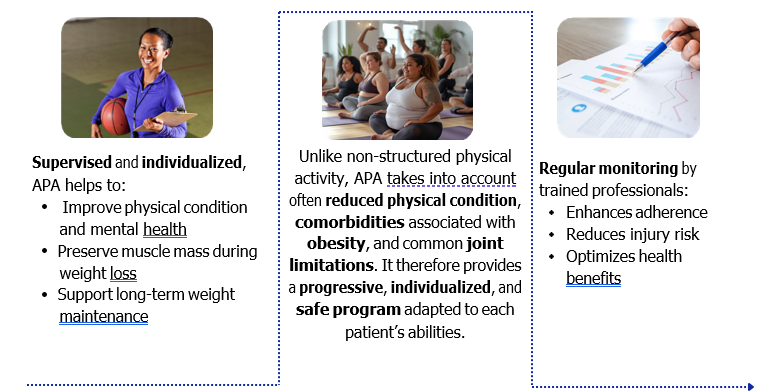
Adapted Physical Activity (APA) can be integrated into the management of obesity:
Conclusion
Adapted Physical Activity is a supervised and personalized movement practice tailored to individual abilities and needs. It is accessible regardless of age, physical condition, or limitations, and contributes to maintaining independence, strengthening self-confidence, and improving daily quality of life. Integrated into a global health approach, it is a simple and effective tool for prevention and support, including for people living with a condition or functional limitation.
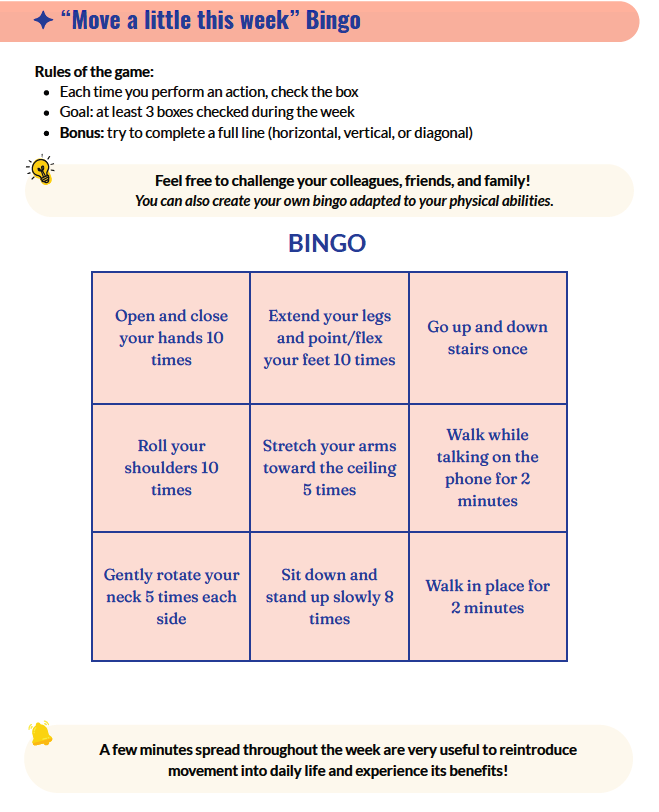
“Move a little this week” Bingo
Tailored movement: Adapted Physical Activity(APA)
-
pdf – 494 KB