
Let’s talk about bariatric surgery


Obesity is a complex chronic disease that can have significant consequences on health and quality of life. As a second-line treatment, when a balanced diet, physical activity, and medication do not achieve satisfactory results, bariatric surgery may be considered by healthcare professionals. It includes a range of procedures performed on the stomach and/or intestine aimed at treating severe obesity and its complications.
In this newsletter, we invite you to discover who it is intended for, how it works, and the benefits it can provide.
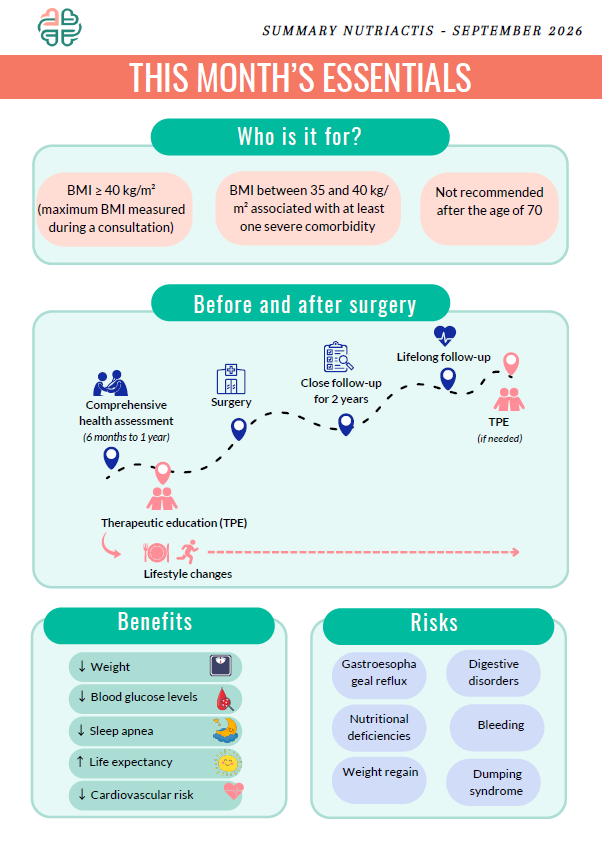
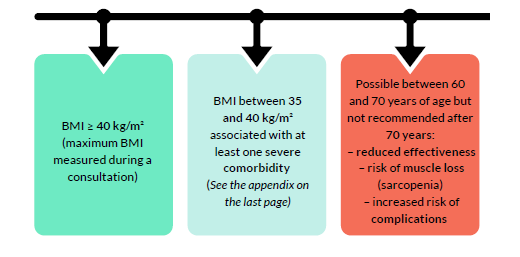
Who is it for?
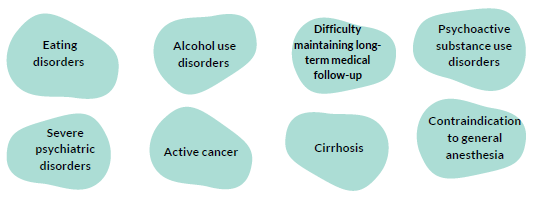
Un certain nombre de contre-indications à la chirurgie bariatrique existent dont :
Before surgery
The care pathway consists of several stages, from preparation for surgery through long-term followup:
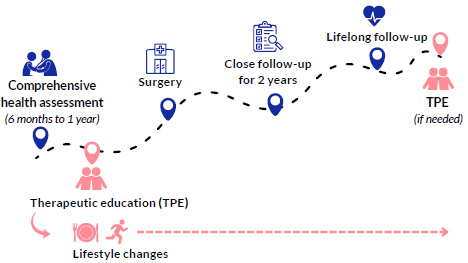
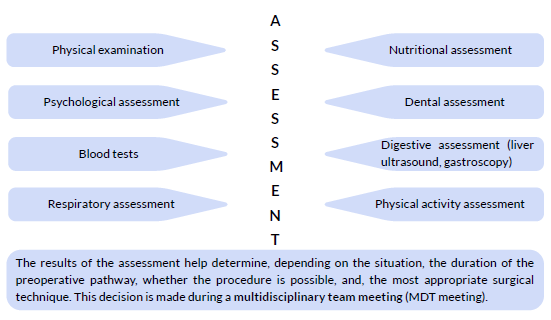
Before bariatric surgery can be considered, patients must undergo a structured, multidisciplinary, extended, and mandatory preoperative pathway. The aim is to ensure that surgery is appropriate and safe, and that the patient is ready to adopt long-term lifestyle changes.
The preoperative pathway lasts at least 6 months, or longer if necessary. The preoperative pathway includes a comprehensive assessment consisting of various examinations and specialist consultations carried out over several months to evaluate the overall health status.
In addition, participation in a therapeutic patient education (TPE) programme is recommended. This consists of a series of sessions supervised by different healthcare professionals, helping patients better understand obesity, prepare for surgery, and gain a better understanding of the key aspects of the procedure.
The therapeutic patient education programme consists of:
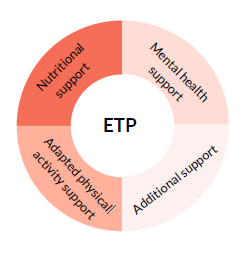
- The dietitian explains how to adapt eating habits and establish new dietary routines.
- An Adapted Physical Activity (APA) professional offers tailored sessions to gradually (re)introduce physical activity and prepare for surgery and the post-operative period.
- Before bariatric surgery, the psychologist supports the patient by addressing their expectations and concerns and helping them anticipate the changes associated with surgery (dietary, physical, …).
- Depending on individual needs, other healthcare professionals may be involved, such as an addiction specialist, psychiatrist, or physiotherapist.
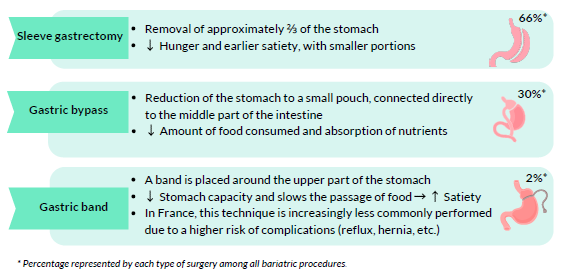
The main types of surgeries
Bariatric surgery involves modifying the anatomy of the digestive system, particularly the stomach, to limit the amount of food consumed and its absorption by the body.
Benefits and risks
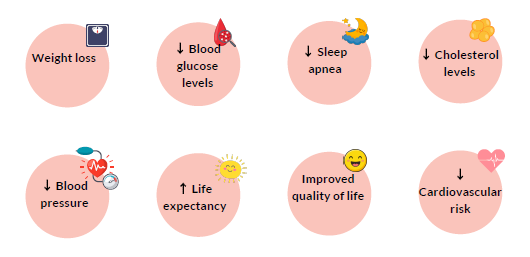
Bariatric surgery leads to significant weight loss, which is associated with an improvement in overall health and, in many cases, also with improvements in obesity-related comorbidities. However, outcomes vary from person to person and depend on many factors, including medical follow-up and lifestyle changes (a suitable diet, physical activity, …).
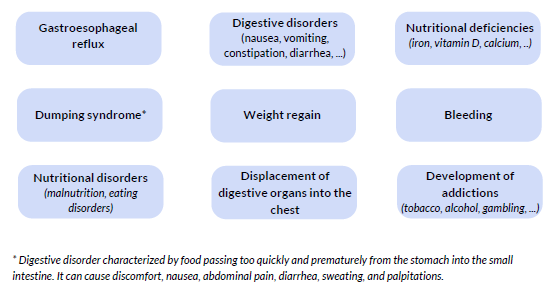
Bariatric surgery is generally safe and effective, but like any surgical procedure, it may involve complications or side effects, sometimes serious, such as:
What happens afterwards?
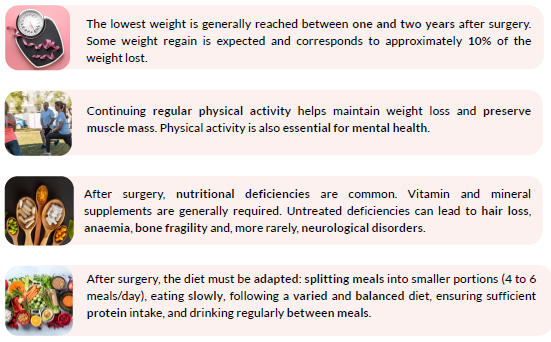
After surgery, lifelong medical and nutritional follow-up is essential, with regular consultations during the first two years and then at longer intervals thereafter. The advice provided through therapeutic patient education (TPE), particularly regarding diet and physical activity, should be applied on a daily basis.
Conclusion
Bariatric surgery is offered to people with severe obesity when other approaches have not been sufficient (diet, physical activity, medication). This is not a decision to be taken lightly: it is a procedure that must be part of a structured, multidisciplinary care pathway before, during and after surgery. Therapeutic patient education sessions are strongly recommended to help understand the condition, the surgery, and support throughout the journey.

Would you like to learn more?
Access the full scientific sources and detailed appendices, and test your knowledge with the game: “The Maze: On the Path to Bariatric Surgery.”
Download full newsletter (PDF)
-
Nutriactis September 26 – Let's talk about bariatric surgery
pdf – 2 MB