
Breakfast: the keys to a good start to the day


Breakfast is generally the first meal of the day, following a period of overnight fasting (with no food intake). Its composition varies according to each person’s needs, habits and preferences. Beyond its nutritional contribution, breakfast can also be an opportunity to take some time for yourself or share a pleasant moment with loved ones to start the day well.
So, what could you put on the menu for your next breakfast? This newsletter offers a few simple guidelines to help you better understand and choose your breakfast.
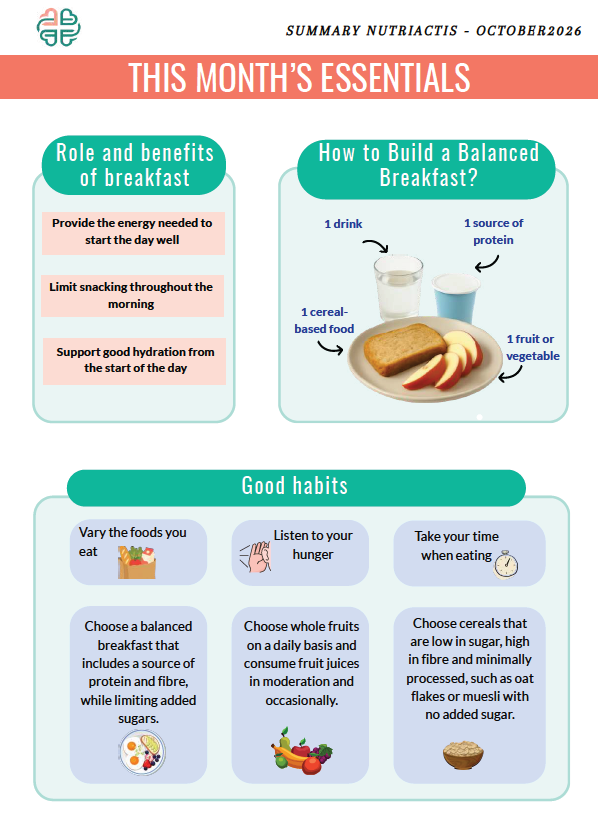
The Role and benefits of breakfast
A balanced breakfast can help :
1. Provide the energy needed to start the day well
The first meal of the day breaks the overnight fast by providing the body with the energy it needs for physical and intellectual functioning throughout the morning.
2. Limit snacking during the morning
A balanced breakfast can help limit snacking, especially when it contains a source of protein and fibre, which can promote satiety.
3. Support good hydration from the start of the day
After a night without drinking, breakfast can contribute to rehydrating the body.
How to Build a Balanced Breakfast?
A balanced breakfast generally combines several food groups in order to provide the body with the nutrients it needs to start the day well.
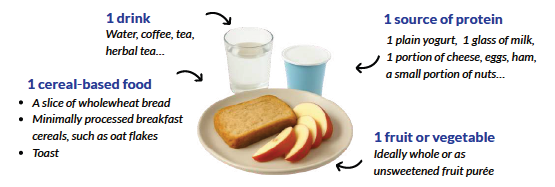
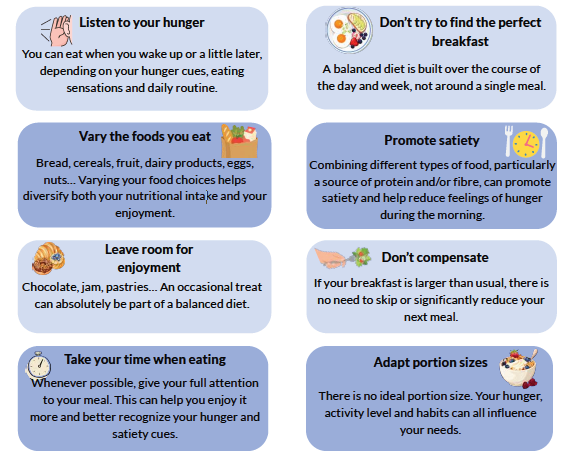
However, breakfast should be adapted to each individual: the key is to listen to your eating sensations, vary the foods you eat and find a balance that suits your needs and your routine.
Common Misconceptions About Breakfast
Is a savory breakfast really better than a sweet breakfast?

Current scientific evidence does not allow us to conclude that a savory breakfast is, in itself, better than a sweet breakfast. What appears to matter more is its nutritional composition, particularly the amount of added sugars, fibre, protein and the quality of the carbohydrates. Added sugars can contribute to increasing overall sugar intake throughout the day.
The WHO recommends limiting free sugars — including added sugars, as well as sugars naturally present in honey, syrups and fruit juices — to less than 10% of daily energy intake, equivalent to around 50 g per day for a 2,000 kcal diet, and ideally to 5% or less, or approximately 25 g per day.
Whole grains provide more fibre, vitamins and minerals than refined grains, such as white bread. Regular consumption of whole grains has been associated with a lower risk of cardiovascular disease, type 2 diabetes and certain cancers. It is therefore worthwhile, whenever possible, to choose whole or minimally refined grains, such as oat flakes, Wholewheat bread or wholegrain crispbread.
In addition, a breakfast containing a source of protein, such as dairy products, may promote satiety.
In practice, rather than opposing “savory” and “sweet” breakfasts, it is better to focus on a balanced breakfast that includes a source of protein and fibre while limiting added sugars.
Skipping breakfast is bad for your health
Some studies suggest that regularly skipping breakfast or eating breakfast later in the day may be associated with alterations in glucose and lipid regulation and a higher risk of low-grade inflammation. However, these associations should be interpreted with caution. They may partly reflect the overall eating pattern, including factors such as eating dinner late or less than two hours before bedtime, which may themselves be associated with skipping breakfast.
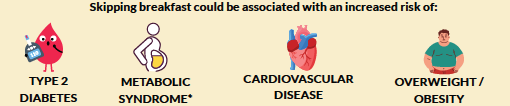
*a combination of several health conditions associated with excess abdominal fat. It is generally defined as the presence of at least three of the following criteria: increased waist circumference, elevated blood glucose, high blood pressure, high triglyceride levels and low HDL cholesterol.
These findings should nevertheless be considered in light of the methodological limitations of the available studies, including differences in the definition of breakfast skipping, relatively small sample sizes in some intervention studies and varying follow-up periods. Further research is needed to better understand these associations.
Fruit juice replaces a serving of fruit
Fruit juice does not replace whole fruit.
Even when it is 100% fruit juice with no added sugars, fruit juice differs from whole fruit because:
- it contains less fibre and is generally less filling;
- it can provide a higher amount of sugar per serving, as several pieces of fruit may be needed to make one glass of juice;
- the sugars in juice are more readily available, which can lead to a faster rise in blood glucose than when eating whole fruit.
In addition, some fruit drinks, such as fruit nectars and fruit-based drinks, contain
added sugars.
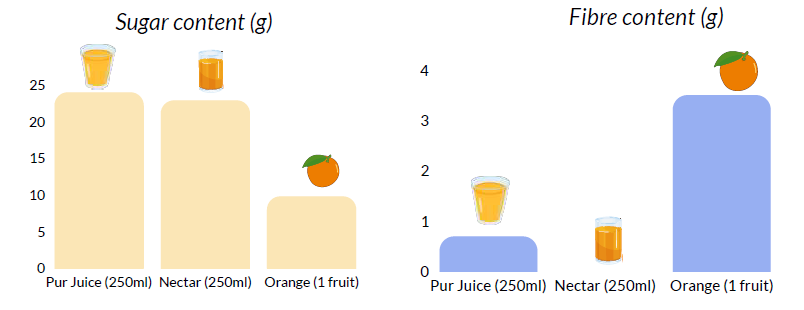
The right habit: choose whole fruit on a daily basis and consume fruit juice in moderation and occasionally.
All breakfast cereals are the same
Not all breakfast cereals are nutritionally equivalent. Many breakfast cereals are ultra-processed, and some contain relatively high amounts of sugar, salt or fat and relatively little fibre. This is particularly true of some chocolate-coated, filled or highly sweetened cereals.
Some varieties are particularly high in sugar, such as filled or chocolate cereals. For example, a 60 g serving (approximately 6 tablespoons) of filled breakfast cereals may provide around 14–16% of daily sugar intake, corresponding to approximately 15 g of free sugars per 60 g serving, whereas oat flakes contain less than 1% sugar.
The right habit: check the ingredient list and the nutrition information. Choose cereals that are low in sugar, high in fibre and minimally processed, such as oat flakes or muesli with no added sugars.
Tips to Make Breakfast Easier
“I’m not hungry in the morning”
A lack of appetite when you wake up may be related to a dinner that is too large
or too late, or to not getting enough sleep.
A few tips may help:
- If possible, wake up slightly earlier to give yourself time for your appetite to develop.
- Get ready before having breakfast, rather than eating immediately after waking up.
- If your appetite remains low, choose a light breakfast and, if needed, have a balanced snack a little later in the morning.
“Mornings are always a rush!”
To reduce stress and save time in the morning, try preparing things the night before:
- Set the breakfast table the night before.
- Take out bowls, glasses, cutlery and foods that do not need to be refrigerated.
- Prepare some foods in advance: cut-up fruit, toast, overnight oats, etc.
- If needed, plan a breakfast that you can take with you.
Some ideas for breakfast on the go:
- Homemade cereal bar.
- An apple + homemade yogurt cake.
- A Wholewheat bread sandwich with unsweetened peanut butter and banana.
- A small Wholewheat bread sandwich with cream cheese and ham.
- A small pot of fromage blanc with oat flakes and fruit.
- Two small homemade pancakes + a few pieces of fruit.
“I’m tired of eating the same thing every day!”

To avoid getting bored, vary your choices!
If you usually have a sweet breakfast, why not try a savory option? And vice versa.
Some sweet breakfast ideas
- Wholewheat toast + peanut or almond butter + banana.
- Fromage blanc or yogurt + oat flakes + fruit.
- Bread + fromage blanc + berries.
- Homemade pancakes + yogurt + fruit.
- Muesli or granola + milk/yogurt + fruit.
Some savory breakfast ideas
- Wholewheat bread + cream cheese + egg.
- Avocado toast + egg.
- Wholewheat bread + cheese + a few cherry tomatoes.
- Scrambled egg + a slice of bread + fruit.
- Small Wholewheat bread sandwich with cream cheese and ham.
Conclusion

Breakfast helps break the overnight fast and provides the energy and nutrients needed for the proper functioning of the body and mind. Whether sweet or savory, the key is to choose a balanced breakfast, including a source of protein and limiting added sugars.
If you are having difficulty organising your meals, or would like more information about breakfast or snacks, do not hesitate to seek advice from a nutrition professional, who can provide guidance and answer your questions.
Want to dive deeper into the topic?
Access the full scientific references and nutritional guidelines used in this newsletter to better understand your eating habits.
Ready to put it into practice? Discover our delicious homemade muesli recipe and start your morning with a healthy, crunchy treat!
Download full newsletter (PDF)
-
Nutriactis October 26 – Breakfast: the keys to a good start to the day
pdf – 711 KB