
Cadmium: an overview
Source : Nutriactis/Rouen-Normandie hospital


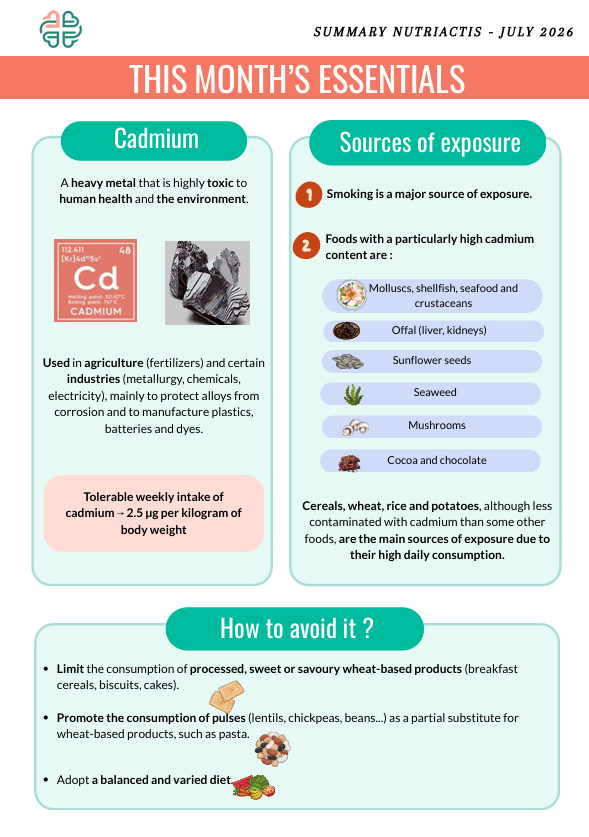
Cadmium is a metal that occurs naturally in our environment, particularly in soil, air, and water. Certain human activities, such as agriculture and industry, can contribute to increasing its presence in nature. Repeated exposure or exposure to high amounts of this metal can have harmful effects on human health. Today, diet is the main source of cadmium exposure, which is why it’s a public health issue requiring particular attention.
In this newsletter, we invite you to find out more about this metal, where to find it and how to avoid it.
What is cadmium ?
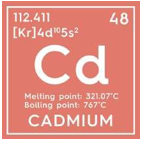
- A heavy metal that is highly toxic to human health and the environment
- Discovered in 1817 by Friedrich Stromeyer in Göttingen, Germany
- A silvery-white, soft and malleable metal, widely used since the 19th century due to its physical properties
- Used in agriculture (fertilizers) and certain industries (metallurgy, chemicals, electricity), mainly to protect alloys from corrosion and to manufacture plastics, batteries and dyes (see Appendix)
- According to the European Food Safety Authority (EFSA), the tolerable weekly intake of cadmium is 2.5 μg per kilogram of body weight
Focus on heavy metals
Heavy metals are elements that occur naturally in the environment. They become hazardous when they accumulate in large amounts in soil, water, air, or living organisms. These emissions come from both natural phenomena, such as volcanic eruptions and rock erosion, and human activities such as industry, agriculture, transport, and waste management. Unlike other pollutants, they do not break down easily and can accumulate in food, whether of animal or plant origin, throughout the food chain and subsequently in the human body. The most well-known and most dangerous are cadmium, lead, mercury, and arsenic. Prolonged exposure can cause health problems, especially affecting the kidneys, nervous system, bones, and heart.
Few numbers
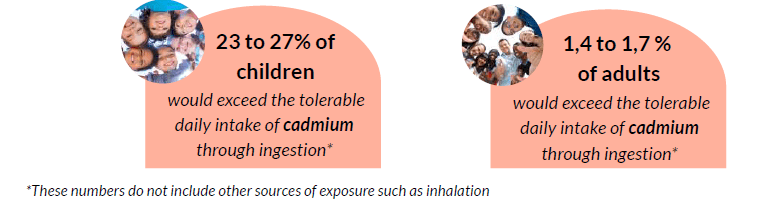
The analysis of the French Total Diet Study 3 (EAT-3), whose results were published in early 2026, shows that:
Where does our exposure to cadmium come from ?
- Smoking is a major source of exposure.
- a cigarette contains about 2 μg of cadmium
- cadmium is inhaled in the form of fine particles which can settle in the lung alveoli
- Diet accounts for up to 98% of cadmium exposure in non-smokers. It is mainly found in our diet through plants, which absorb it through their roots when they grow in soils containing high levels of cadmium.
- In France, fertilizing materials are responsible for more than 80% of the cadmium inputs in agricultural soils
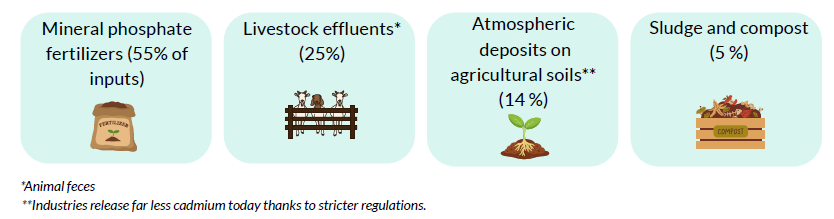
Organic foods can also contain cadmium, particularly as a result of air pollution and
certain cadmium-containing fertilizers that are permitted in organic farming.
When animals consume food containing cadmium, it mainly accumulates in their kidneys and liver, where it is eliminated very slowly. Some species, such as horses, accumulate cadmium particularly strongly, which has led to a ban on consuming their offal since 2019.
Les principales sources d’exposition
Foods with a particularly high cadmium content are:
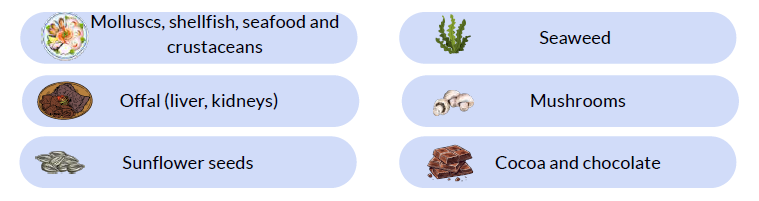
Highly contaminated foods are not necessarily the main contributors.
In fact, foods that are highly contaminated but consumed only occasionally contribute less to overall exposure than foods that are less contaminated but consumed daily. Thus, despite its relatively high cadmium content, chocolate accounts for less than 3 per cent of the French population’s dietary exposure. It is therefore not among the main sources of cadmium exposure.
Foods such as cereals, wheat, rice and potatoes contain lower levels of cadmium, but as they are consumed in large quantities on a daily basis, they represent a significant source of exposure for the population
Effects on humain health
Carcinogenic, mutagenic and toxic to reproduction
- Increased risk of lung cancer in occupational exposure
- Suspected of causing other cancers, such as pancreatic, bladder, prostate or breast cancer
Kidney damage
- Can cause kidney failure and bone fragility
Cardiovascular system damage
- Cadmium can also have negative effects on the functioning of the heart and blood vessels
Neurological damage
- Cadmium exposure is associated with reduced concentration, cognitive disorders in elderly people, and learning difficulties in children
- It may also be linked to certain neurodegenerative diseases such as Alzheimer’s or Parkinson’s disease
How to avoid it ?
Actions taken by health authorities
Several actions have been identified by the French National Food Safety Authority (ANSES) to reduce cadmium, including :
- Promote agricultural practices that reduce cadmium accumulation (less contaminated fertilizers, fertelizer labelling, optimized fertelization, varieties that accumulate less cadmium…)
- Commitment from all stakeholders to improve regulations
- Reduce contamination in the food supply, including imported products, by revising the maximum permitted cadmium levels in foods that contribute most to exposure
Consumer actions
In particular, it is advisable to :
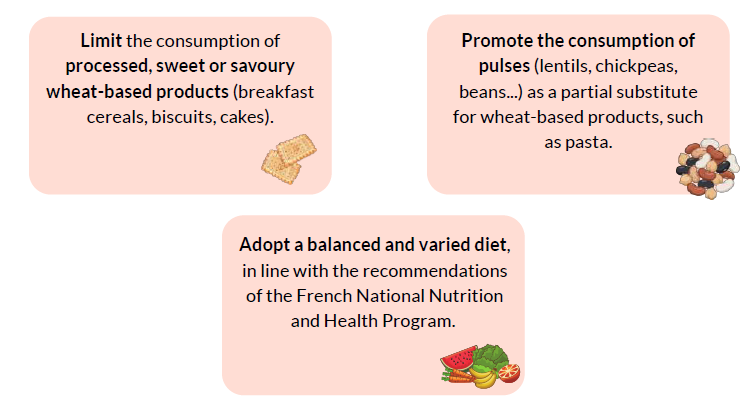
Conclusion

Cadmium is a toxic heavy metal that can pose significant risks to health. Although its use is now strictly regulated and being progressively reduced, it remains present in our environment. To limit its accumulation in the body, it is recommended to favour a varied and balanced diet.
“Rainbow” Challenge
How about adding a bit more colour to your plate ?
This week, take up the challenge : at every meal, choose 3 to 5 different colours from the palette below and try to find them in the foods you eat. Aim to include all 8 colours at least once during the week !


-
Cadmium: an overview
pdf – 1 MB