
PNNS 5: Priorities for healthy and accessible nutrition
Source : Nutriactis/Rouen-Normandie hospital


In last month’s newsletter (see previous issue), we introduced the French National Nutrition and Health Program (PNNS), outlining its historical development and key recommendations for nutrition and public health.
During the One Health Summit held in April 2026, the government unveiled the fifth National Nutrition and Health Program (PNNS 5), which will cover the period 2026–2030. This new program builds on previous initiatives while addressing emerging health, social, and environmental challenges.
Why a New Version?
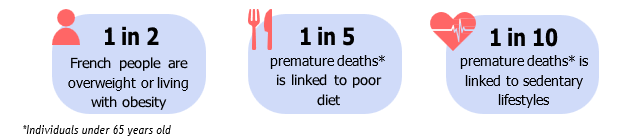
Nutrition is a key factor in preventing chronic diseases and promoting health throughout life. Since 2001, the PNNS has aimed to improve eating habits, enhance the nutritional environment, promote physical activity, and reduce sedentary behavior.
With its fifth edition, PNNS strengthens and expands its actions through 2030 to further prevent chronic diseases and reduce health inequalities.
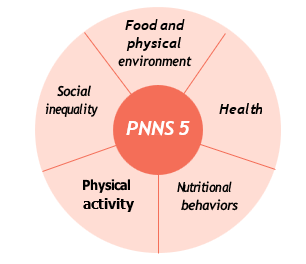
PNNS 5 follows a comprehensive approach covering multiple areas of intervention:
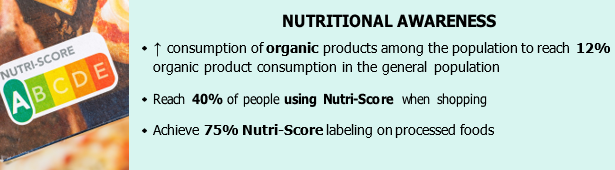
PNNS 5 Objectives
The objectives are structured around four main pillars:



Key Missions of PNNS 5
The missions of PNNS 5 are structured around three main axes:
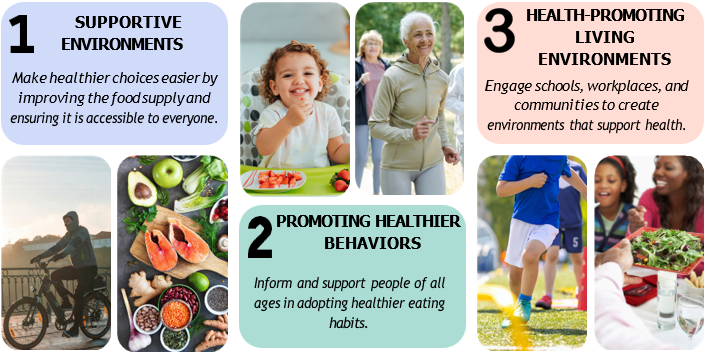
Twenty concrete measures have been defined. Here is a summary:
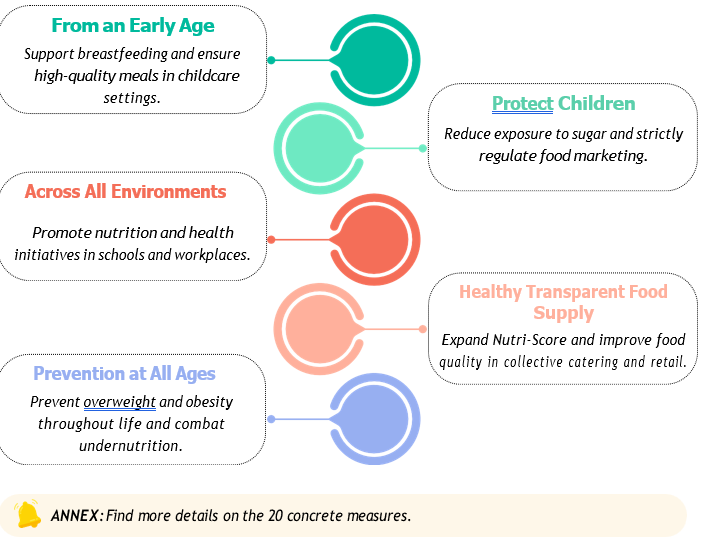
Conclusion

Recently launched, PNNS 5 continues France’s public health strategy to improve population health. It focuses on three key levers: diet, physical activity, and reducing sedentary behavior, combining environmental changes with individual behavior shifts.
It also aims to reduce social health inequalities across mainland France and overseas territories
Myth vs Fact Quiz – PNNS 5
Some common beliefs about nutrition and health can be misleading… Let’s sort fact from fiction!
Read each statement and decide whether it’s a myth or a fact.
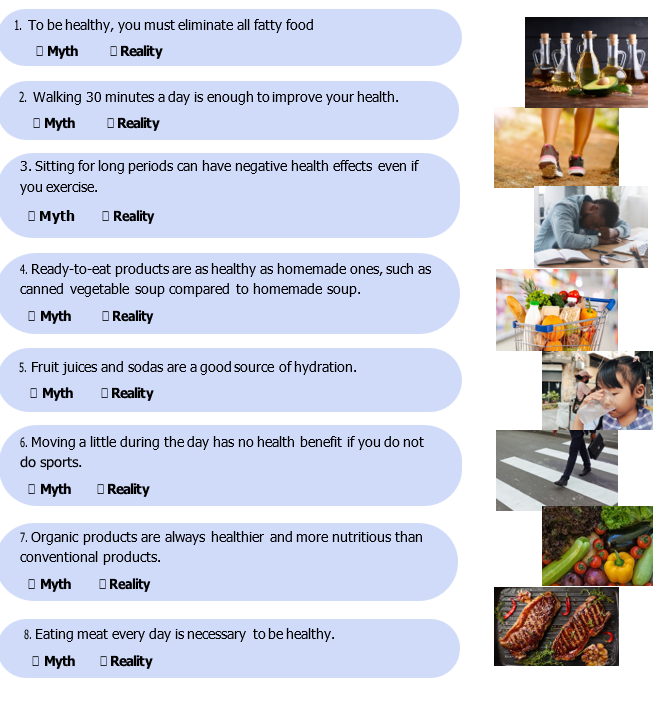
Congratulations on completing the quiz and taking an interest in your health!
We hope it helped you learn a little more about nutrition.
Answers:
- ❌Myth
Fats are essential when consumed in appropriate amounts. Prioritize vegetable oils rich in omega-3. - ✅Reality
Walking 30 minutes a day improves health. - ✅Reality
Prolonged sitting is a health risk—even for active people. - ❌Myth
Processed ready-to-eat foods are often less healthy than homemade meals due to additives, salt, sugar, and saturated fats. - ❌Myth
Although sugary drinks and sodas contain water, they are not a good source of hydration. They are high in sugar or sweeteners, which can have harmful effects on health. Water remains the best drink for optimal hydration. - ❌Myth
Even small daily movements benefit health. - ❌Myth
Organic products are grown without pesticides or chemical inputs, but this does not guarantee a healthy nutritional composition. Indeed, there are also ultra-processed organic products containing additives and high levels of sugar and fat. The main well-established benefit of organic products is the reduction of exposure to synthetic pesticide residues, rather than an overall nutritional superiority. - ❌Myth
Although meat is an important source of protein and nutrients such as iron and vitamin B12, excessive consumption of meat—especially red and processed meat—can be associated with health risks, such as cardiovascular diseases and certain cancers. It is recommended to prefer poultry and limit other meats (pork, beef, veal, lamb, mutton,…) to 500g per week.
Priorities for healthy and accessible nutrition (PNNS 5)
-
pdf – 890 KB