
Scientific Ressources


I need more complete information on a subject addressed in a technical and/or medical way? In this section, I will find scientific resources from the World Obesity Federation, UNICEF, the Rouen University Hospital,… – reports, studies… – which will allow me to deepen my reading on a particular subject.
Resources from the Nutriactis program in partnership with the Rouen University Hospital with the support of the Charles Nicolle Normandy Foundation
-
 Link between diet, eating disorders and obesityIn certain situations, the relationship with food can be disturbed, leading to emotional eating, special diets or even addiction, which can ultimately lead to the development of EDS or obesity.
 -
 Link between addictions, eating disorders and obesitySeveral studies have reported a link between the consumption of addictive substances (alcohol, tobacco, and cannabis) and the onset of an eating disorder (EDs) or obesity. In fact, compared to a control group, the use of such substances in patients with an eating disorder, and more particularly in those suffering from bulimia.
 -
 Link between body image perception, eating disorders and obesityEating disorders and obesity are closely linked to body image perception, which is defined as the mental representation of one’s own body.
 -
 Link between cyber addiction, eating disorders and obesityCyber addiction is a disorder that includes, among other things, addiction to various screens (smartphones, televisions, tablets, game consoles), the Internet and social networks. With an average exposure of more than 12 hours a day in 2020, the use of screens and social networks is on the rise worldwide, and can have harmful effects on health.
 -
 Link between emotions, eating disorders and obesityScientific studies have found more personality traits associated with negative emotion in patients with EDs or obesity compared to the general population. Indeed, patients with TCA, and in particular bulimia, frequently have a high level of neuroticism.
 -
 Link between physical activities, eating disorders and obesityAccording to the World Health Organization (WHO), a sedentary lifestyle is one of the main risk factors for mortality from non-communicable diseases. People with insufficient physical activity have a 20% to 30% higher risk of death than those who are sufficiently active
 -
 Link between sleep, disorders and obesitySleep plays an essential role in our health and well-being, and it’s recommended that adults sleep at least 7 hours a night. Sleep influences various physiological mechanisms, such as the immune system, energy homeostasis and hormone signaling.
 -
 Link between quality of life, eating disorders and obesityNumerous studies in the literature have highlighted a reduction in quality of life, and in particular health-related quality of life, in patients suffering from EDs or obesity. Indeed, the more severe the symptoms of EDs, the greater the reduction in quality of life.
 -
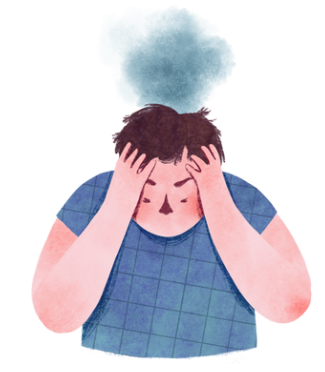 Link between anxiety / depression, eating disorders and obesityThe increase in the prevalence of obesity worldwide may be partly associated with an increase in the prevalence of anxiety and depressive disorders. In fact, a recent study showed that obese/overweight people and people with EDs were more anxious than those of normal weight were. Around 50% of patients suffering from an EDs also suffer from anxiety or depression.
 -
 Link between personality traits, eating disorders and obesity.The scientific literature has shown that interpersonal relationships and certain personality traits such as self-compassion, cognitive dissonance, perfectionism and impulsivity can be risk factors for the development and maintenance of EDs and obesity.
 -
Scientific research
Scientific Ressources From The World Health Organization


Scientific Ressources From UNICEF



Scientific Ressources of the World Obesity Federation
-
 Obesity RootsTogether we can create a healthier future. To have a real impact on obesity, we need to work together to address its many root causes throughout society.
 -
 Fact Sheet on ObesityWhat is Obesity? Obesity is defined by the World Health Organisation as ‘abnormal or excessive fat accumulation that presents a risk to health’. It is most commonly measured by BMI, though there are other methods such as waist and height ratios that taken with BMI, can be more accurate.
 -
 World Obesity Atlas 2024Obesity and its consequences • Global, regional and national estimates of the contribution of obesity to leading noncommunicable diseases in adults • Global, regional and national predictions of the effects of obesity on children’s higher risk of non-communicable diseases • 186 national scorecards for child and adult obesity and its consequences
 -
 Language guidelines and image banksIn this section, WOF compiles a variety of image banks and language guidelines which aim to reduce weight-based stigma.