
The keys to a healthy diet with the National Nutrition and Health Program (PNNS)
Source : Nutriactis/Rouen-Normandie hospital

Nutrition is a key component of population health and plays a major role in preventing many chronic conditions such as obesity, diabetes, and cardiovascular diseases. Aware of these challenges, France implemented the National Nutrition and Health Program (PNNS), which aims to sustainably improve the health of the French population and promote health-supportive behaviors, particularly through diet and physical activity.
In this newsletter, we invite you to discover this program, its objectives, and the recommendations that stem from it.
The history of the program
Launched in 2001 and led by the Ministry of Health and Prevention, the PNNS is based on two fundamental pillars: nutrition and physical activity. It relies on the dissemination of nutrition recommendations accessible to everyone, as well as the implementation of prevention actions, including the promotion of regular physical activity. The program also includes education and awareness initiatives
The PNNS involves many stakeholders such as healthcare professionals, schools, and the agri-food industry, acting at individual, collective, and environmental levels to encourage healthy lifestyle choices and reduce social inequalities.
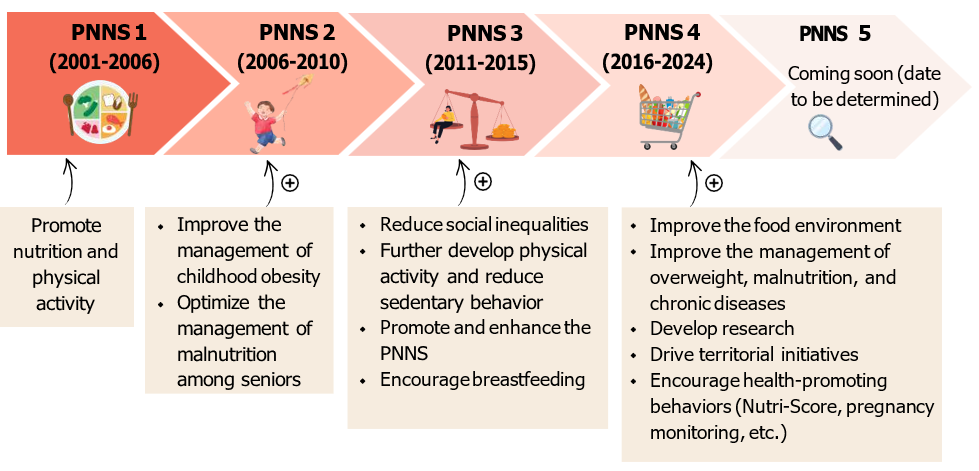
The PNNS has evolved over the years (PNNS 1 → PNNS 4) to adapt its goals to scientific advancements as well as emerging societal challenges.
PNNS 4 missions
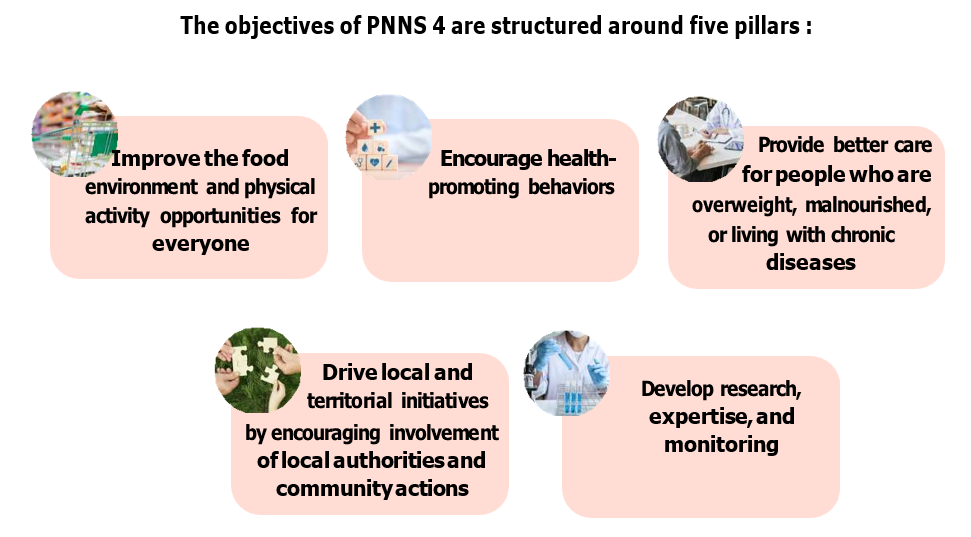
The objectives of PNNS 4 are structured around five pillars :
Program Overview
Ten flagship measures were defined to achieve the objectives of the five PNNS 4 pillars. Here are these measures and their main results:
- Promote new nutrition recommendations
- 77.6% of adults are aware of PNNS 4 recommendations on legume consumption
- → 22.8% followed this recommendation in 2021.
- 91% of children in 2021 began food diversification within the recommended window (between 4 and 6 months), compared with 80% in 2012.
2. Promote the Nutri-Score
- More than 1,400 companies use Nutri- Score, covering more than 62% of the market by sales volume.
- 7 countries involved in the European Nutri-Score governance.
3. Increase fiber, reduce salt, sugar and fat in common foods
- – 20% less salt in bread since 2015.
4. Protect children and adolescents from exposure to advertising for unhealthy foods and drinks
- – 70.7% decrease between 2020 and 2022 in advertising for unhealthy foods during youth programs.
- + 1.2% between 2020 and 2022 in advertising for unhealthy foods during family TV programming.
5. Ensure access to quality collective catering with transparency
- 4 guides published to support the implementation of a weekly vegetarian menu in school catering + cook training.
- 27.5% of food procurement in collective catering was sustainable and high quality in 2022 (including 13.1% organic).
6. Extend food education from preschool to high school
- 39% of academies and institutions implemented food education actions between 2020 and 2021.
7. Développer la pratique d’activité physique adaptée (APA) pour les personnes atteintes de maladies chroniques
- Expansion of APA prescription scope
- 1 post-cancer pathway
- 25 APA pilot programs
8. Strengthen adapted physical activity prescriptions by physicians
- 22 guides developed to support healthcare professionals in prescribing adapted physical activity for different conditions.
9. Monitor nutrition among older adults
- 17% of nursing homes participated in Malnutrition Awareness Week in 2023.
10. Promote and share innovative local initiatives nationwide
- 1 website promoting best practices (PNNS Stakeholder Network).
- Simplified procedure for awarding the PNNS logo.
Recommendations
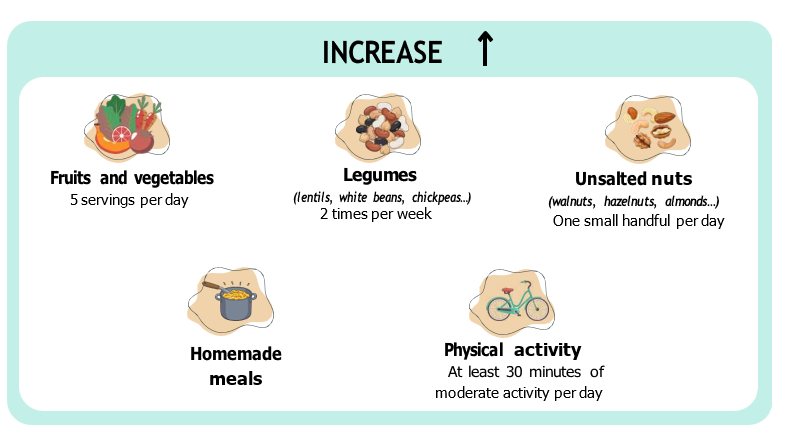
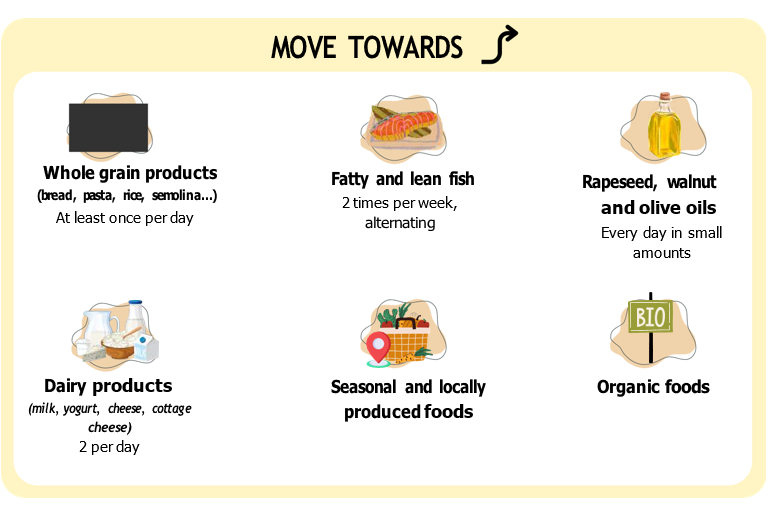
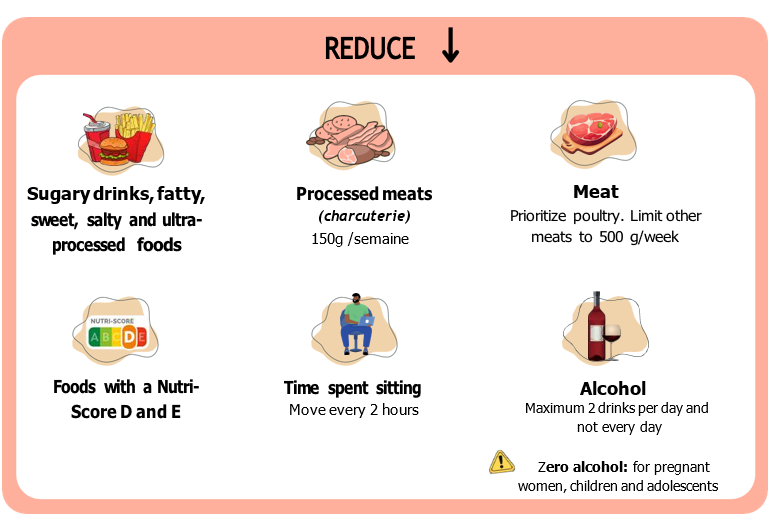
The recommendations published in January 2019 aim to help the population adopt a healthier diet and a more active lifestyle. Developed by Santé publique France, they are based on strong scientific evidence and expert committee work.
Conclusion
The recommendations of the National Nutrition and Health Program (PNNS) provide reliable guidance for adopting a balanced diet. However, it is important to remember that food is not only about nutrition: it also involves pleasure and social interaction, which should be preserved. These recommendations should therefore be viewed as guidelines to help orient choices, not strict rules to be followed rigidly.
PNNS 5, currently being developed, is expected to further integrate environmental and social issues, including the food environment, the organization of the agri-food system, and socio-economic determinants — all key factors for nutritional health. It also plans to broaden its approach to other lifestyle determinants such as sleep and eating behaviors influenced by the digital and marketing environment.
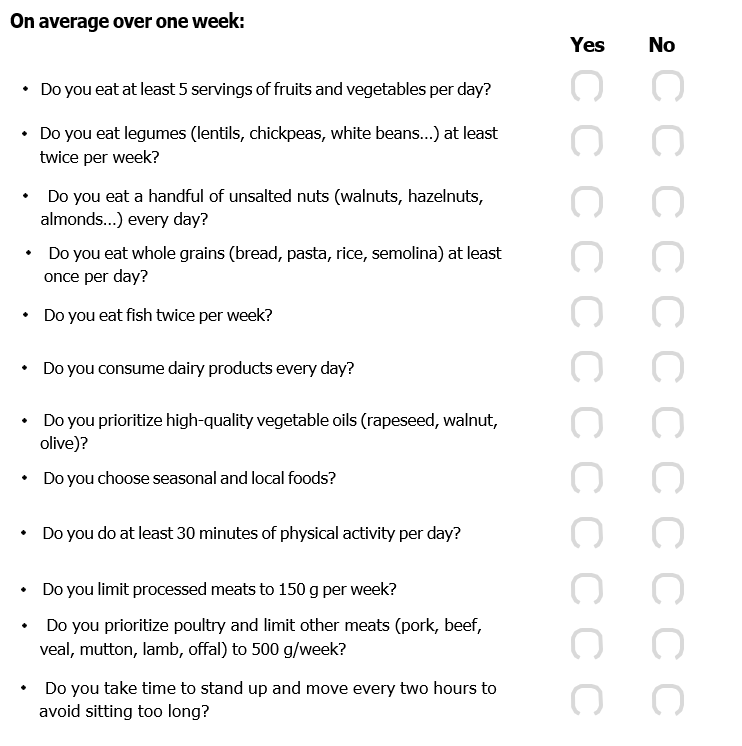
PNNS Recommendation Adherence Questionnaire
⚠️ This questionnaire does not replace medical advice. It is intended only to provide general guidance about your diet, and results should be interpreted with caution. It is not intended for individuals with medical conditions requiring specific diets or personalized nutritional follow-up.
How to calculate your score:
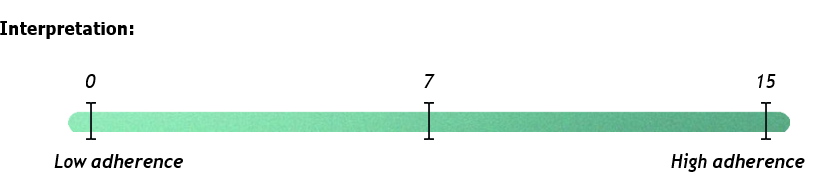
Each “Yes” equals 1 point. The total corresponds to the sum of your points.
-
The keys to a healthy diet with the PNNS
pdf – 1 MB