
Eating Better


Eating a healthy diet on a daily basis makes you feel good and prevents obesity.
What to have for dinner tonight? What products are in season? What is BMI? How can it be calculated? How much protein should you consume per day to be in shape? And by the way, what exactly is a protein?
In this section, you will find tips and practical documents covering the basics of nutrition, to help you manage your diet, daily menus and those of your family.

Discover our recipes
In this section, I will find simple, healthy and affordable recipes accompanied by practical explanations.
Let’s cook together
-
 A Guide to a Successful LunchboxThe lunchbox is a real ally for eating balanced meals daily, while saving time and reducing mealtime stress.
 -
 Cooking Methods: Why Do They Matter?Did you know that how we cook our food can affect not only its taste but also its nutritional quality and even our health?
 -
 How to shop well?Shopping can sometimes be a difficult thing to do : between information-packed labels, lengthy ingredient lists and a tight food budget, it’s not always easy to not get lost. To make things easier for you, we’ve put together a few tips to help you decrypt food labels, save time and manage your budget, while still eating a healthy and balanced diet!
 -
 Making life easier in the kitchenWith our increasingly busy lives and often hectic days, it can be hard to find the time and motivation to cook healthy and balanced meals! We’re here to help you with a few cooking tips.
 -
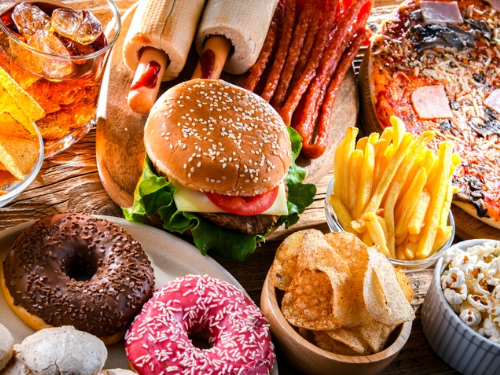 Ultra-processed foods70% of the packaged products available in supermarkets are ultra-processed foods. Sweeter, saltier, fattier, containing fewer vitamins and fibre than raw products (without processing),
Deepen your knowledge of nutrition
-
 Chrononutrition : Myth or scientific reality?
 -
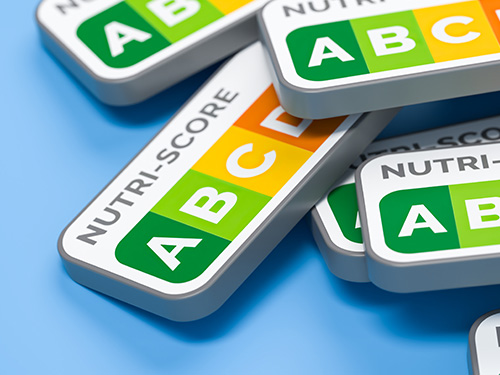 The Nutri-Score decodedDisplayed on the front of packaging, the Nutri-Score was developed by Professor Hercberg’s scientific team to make nutritional information easier to read. It helps consumers make healthier choices through a simple and intuitive color-coded system.
 -
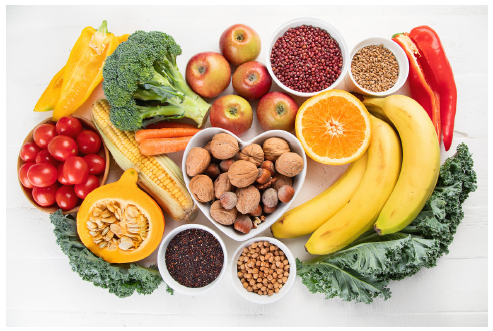 Fibers, a True Health AllyDietary fibers are naturally found in fruits, vegetables, cereals, and oilseeds.
 -
 What Molecules Does Food Contain?To stay in good health, human need to eat to cover their nutritional requirements. All flavors, textures and odours of each food are associated with nutrients , which are food substances assimilated by the body and essential to its proper functioning.
 -
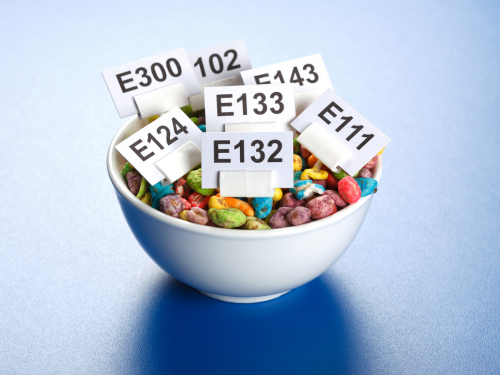 Emulsifiers : What does the research say?Emulsifiers are food additives that have the ability, due to a hydrophobic part (which repels water) and a hydrophilic part (which has affinity for water), to form a homogeneous mixture from substances thatnormally do not mix such as oil and water.
 -
 MicronutrientsUnlike macronutrients, micronutrients do not provide energy, but they are also essential for the development and proper functioning of the body.
 -
 OrthorexiaOrthorexia can be defined as the obsession with eating healthy food. It expresses itself through an excessive concern for food quality and its effects on the body, to the expense of the quantities ingested, sensations about eating and even taste preferences.
 -
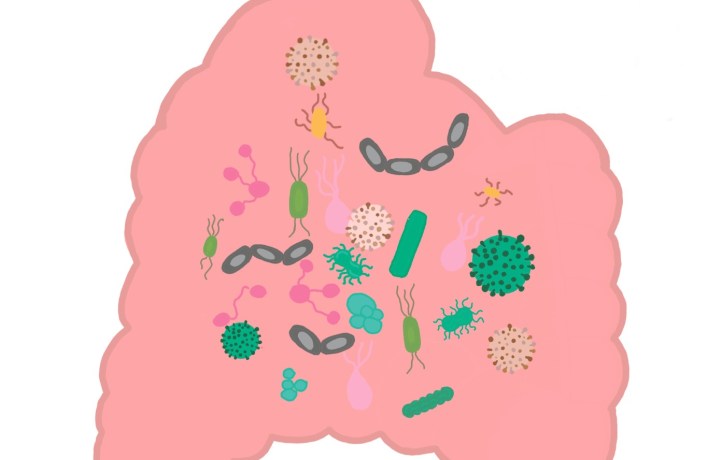 What is the microbiota?Behind this strange name is a complex system of bacteria that live in our intestines. Beyond the digestion of food, the microbiota could be a perspective in the fight against obesity.
 -
 Digital Nutrition ApplicationsRecently, many digital applications focusing on nutrition have been developed and proposed to the general population and could theoretically help them in their nutritional follow-up. However, are these applications really effective for the general population?
Discover other articles
-
 Do fermented foods have any real benefits?Fermented foods have been consumed for thousands of years and are present in many traditional cuisines around the world. Recently, they have been making a comeback. Why? Homemade, longer shelf life, health benefits?
 -
 Nutritional EducationNutritional education consists of a set of educational strategies designed to encourage beneficial, long-term eating habits and physical activity.
 -
Nutrition & Common PreconceptionsNutrition plays an essential role in physical and mental health. Preconceived ideas abound in the media, and it is often complex to distinguish validated information from wrong ideas.
-
 Soft DrinksMany beverages sold commercially contain spectacular amounts of sugars, whether it is a soda (about the equivalent of 7 pieces of sugar in a can), a fruit juice (about 7 sugars in a glass of orange juice), an industrial iced tea (5 sugars in a can), not to mention the so-called energy drinks (8 sugars or more).
 -
 Eating In Front Of A ScreenComputer, mobile phone or television are all distractions that will disconnect you from listening to your eating sensations and therefore disrupt your food intake including taking meals too fast, no chewing, a disruption of the feeling of satiety…
 -
 Sweeteners And Their Impacts On Our HealthA sweetener is any substance that gives a sweet taste. Nowadays, the use of the term sweeteners is often restricted to substances that gives a sweet taste and few or no calories.
 -
 Sensations About Eating, Eating Disorders & ObesityWithout pathology, sensations about eating (SAE) reflect our body’s needs, and when we listen to them, we ensure the balance of our energy and nutritional requirements. However, in some cases, sensations about eating no longer reflect our body’s needs.
 -
 Balanced Diet vs. OrthorexiaIt is called orthorexia, the pathology consisting in the obsession to want to control its diet to consume only healthy products, for example from organic sectors, leading to the elimination of many foods