

Drug treatments for obesity
Source : Nutriactis/Rouen-Normandie hospital

Obesity is a complex condition that can have significant consequences for health. Its management generally begins with lifestyle changes, such as diet and physical activity. However, depending on each patient’s situation, drug treatments, including drug treatments for obesity (DTO), may sometimes be considered alongside lifestyle interventions.
This newsletter aims to help you better understand obesity and to present the specific treatments currently available to support its management.
Obesity: an overview
Obesity is a chronic, multifactorial disease characterized by an abnormal or excessive accumulation of body fat that can have harmful consequences for health.
In 2024, around 18% of adults in France, nearly 10 million people, were living with obesity.
The severity of obesity is classified into several classes based on Body Mass Index (BMI)*:
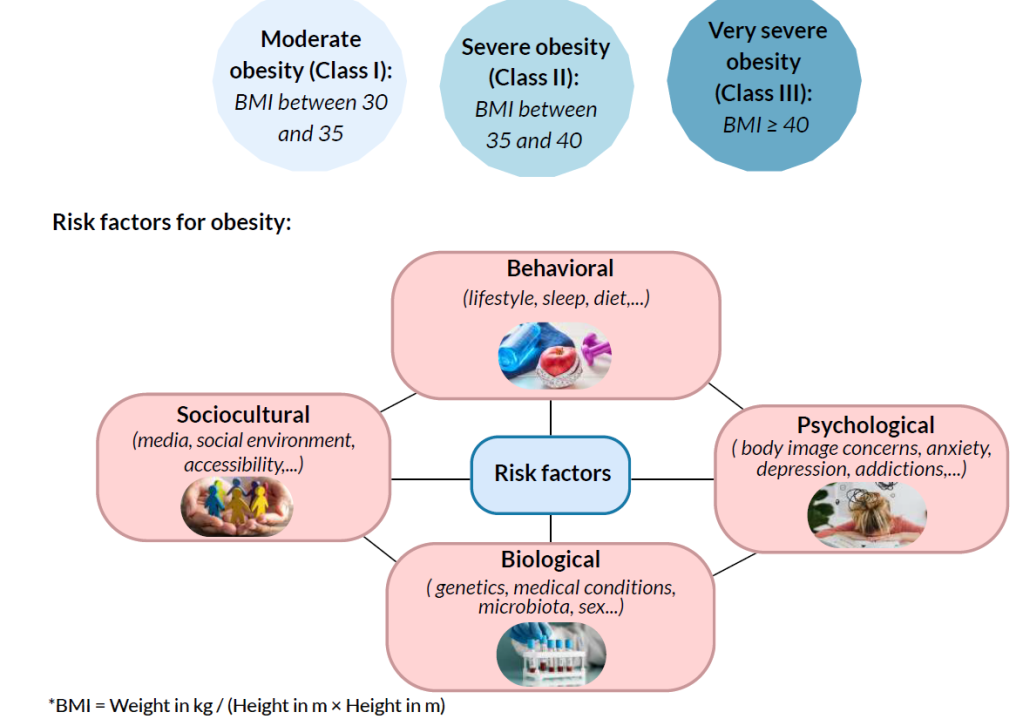
Complications associated with obesity :
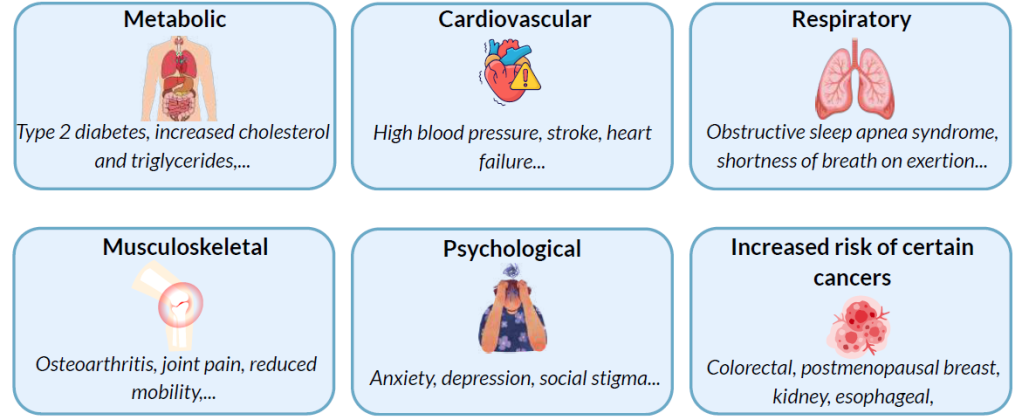
A comprehensive, personalized, long-term approach is therefore essential.
Understanding drug treatments for obesity (DTO)
How do they work ?
DTOs mimic the action of certain hormones naturally produced by the body that generate satiety signals (GLP-1/GIP). By mimicking these molecules or activating their receptors, DTOs contribute to a faster, stronger, and longer-lasting feeling of fullness at the brain level, and they also slow digestion. This leads to:

DTOs therefore increase the chances of medically indicated weight loss.
DTOs approved in France
Liraglutide (Saxenda®), semaglutide (Wegovy®), and tirzepatide (Mounjaro®) are the active substances of DTOs that have marketing authorization in France.
They must be prescribed within a strict medical framework and are currently not reimbursed by the French Social Security system.
Gradual weight loss
- Weight loss occurs gradually, especially during the first year.
- A plateau is generally reached about one year after starting treatment. Weight may stabilize if treatment is continued.
- When treatment is stopped, partial weight regain is common. DTOs are therefore long-term treatments and are part of ongoing obesity management with regular follow-up.
Response to treatment depends on the molecule, the dose, and the individual. Although these treatments are effective for most patients, some show a limited response, which cannot currently be predicted. If weight loss is considered insufficient, the physician may decide to adjust the therapeutic strategy after 6 to 12 months.
Role of DTOs in obesity management
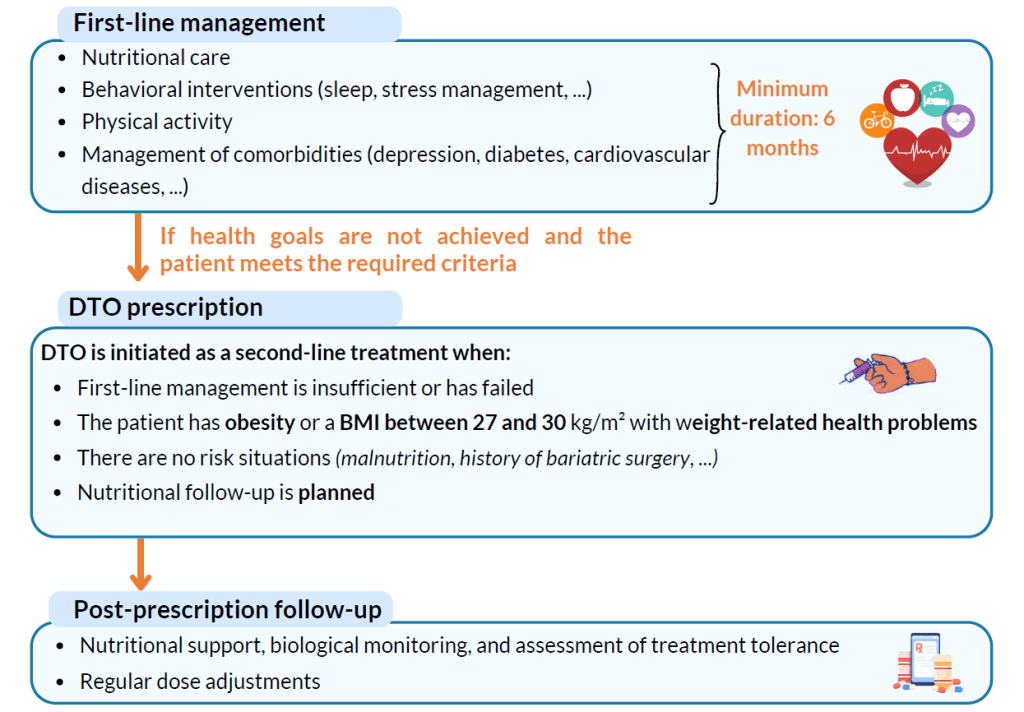
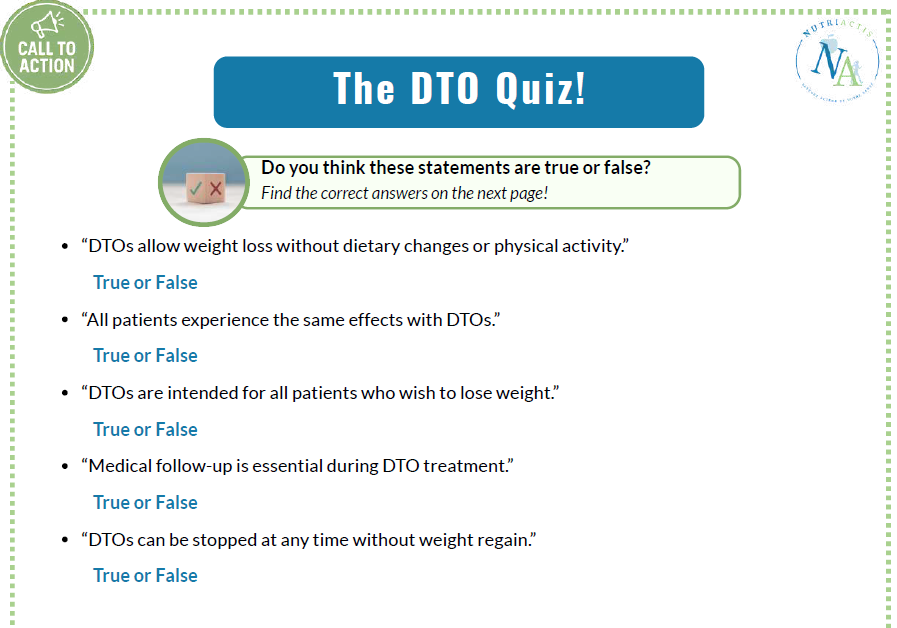
DTOs are part of a comprehensive, individualized care plan. They are not offered as first-line treatment and are only considered when initial measures have failed to achieve the established health goals.
The decision to start a DTO is made by the physician in agreement with the patient, taking into account not only weight, but also obesity-related complications.
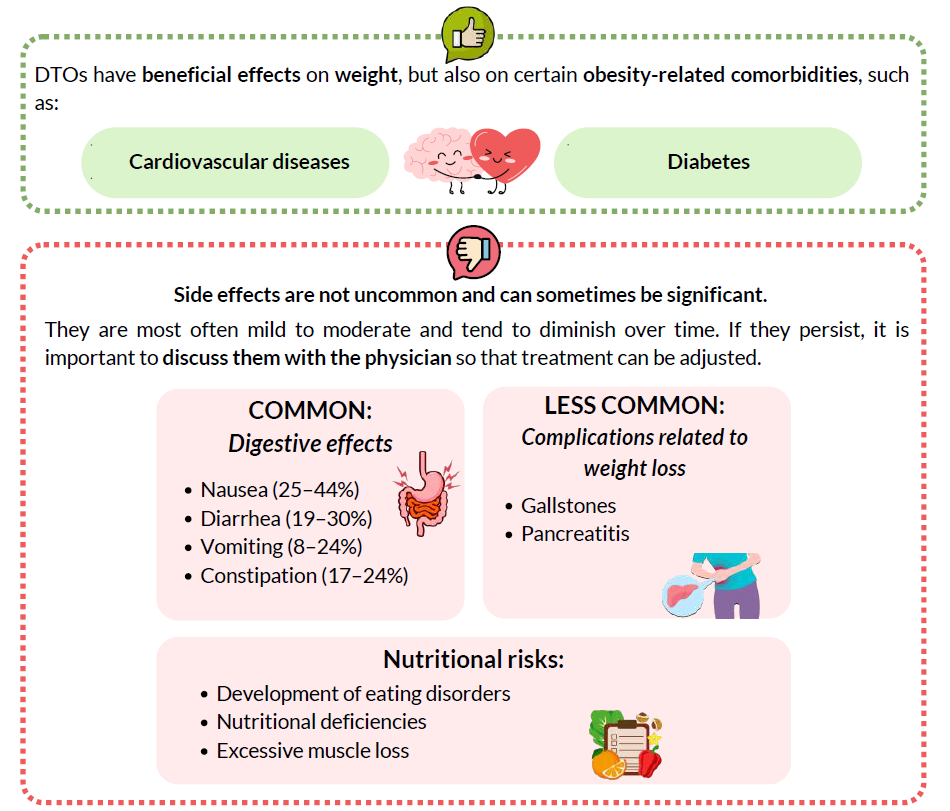
Effects of DTOs on health
Perspectives :
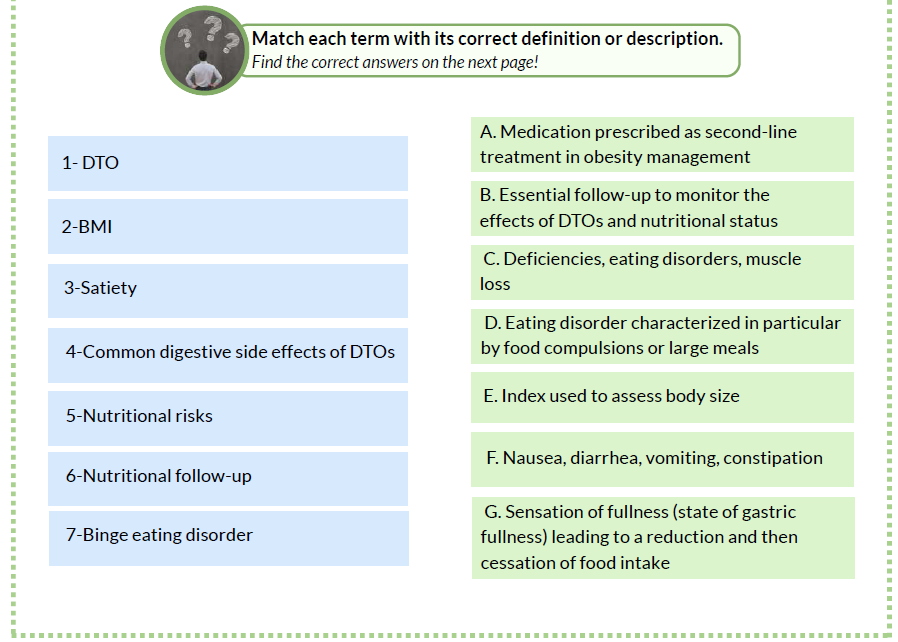
DTOs show promising potential to reduce binge eating disorder (BED) and food compulsions in the short term. They may also have a beneficial effect on metabolic liver diseases (fatty liver disease, …). However, long-term trials remain limited, and further studies are needed to better assess their impact on BED and liver diseases. DTOs are not currently indicated for the treatment of these conditions
Conclusion
DTOs are prescribed only under medical supervision, when first-line treatments have failed to achieve health goals. They are intended for a population meeting well-defined clinical criteria, and regular medical follow-up is essential to assess weight loss and the progression of comorbidities, but above all to monitor side effects which could be significant as well as nutritional risks.
-
Drug treatments for obesity
pdf – 447 KB